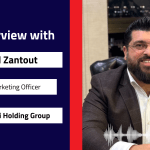

Seamless Xtra’s Alia Alhussein speaks to Ernesto Hane, Chief Marketing Officer at Jumia Group, Senegal. Jumia is a leading e-commerce platform in Africa, built around a marketplace, logistics service and payment service.
Thank you for being with us, Ernesto, it’s great to have you on board. So as we’re aware, the e-commerce industry is rapidly evolving. How do you see it reinventing customer experience using the digital approach, blending physical and digital experiences?
Thank you very much for having me Alia. As franchises between offline and online blur, it’s becoming less and less relevant to draw a line between between them mobilising different resources to handle each channel. So the context we live in is just more connected consumers, more access to information and brands, but more opportunities from brands also to engage customers by providing great experiences.
E-commerce brands are trying to adapt to this new reality. They are building real experiences based on customer preferences. The case of Jumia is very interesting to analyse when it comes to digital experience. Jumia brand is an interface. That means that transactions happen in an application which poses a problem of trust. Do I trust you enough to place an order in your application? In Africa it’s a very important matter. It’s hard to build an e-commerce experience like Amazon where all stuff is delivered at your door. So to build trust, Jumia has decided to make its brand tangible by building pick up stations for example. These pick up stations serve as a way to show people that the business is real. When you order, there are physical spaces where you go to take what you bought.
In markets where customers want to see and touch what they buy, having a physical presence for a digital business is very important. And it is not the only thing that can be done to build trust. It also allows pay on delivery at those same pickup stations. It’s interesting to see that large brand interfaces are doing the same in Africa. Take telcos for example. Their business is more and more digital in Africa, but they maintain their network of agencies because they understand how important it is. At the same time, we had 100% digital banking experiences that were not very successful in this region. Physical experience is always relevant in Africa and brands should remember that.
Continuing on that conversation of of blending experiences, let’s delve into the area of personalised retargeting. Do you agree that transforming one time buyers into repeated customers is the future of e-commerce and how crucial is this strategy in today’s market?
Acquiring loyal customers is critical for any successful business. You need to get people to come back regularly to be able to build a sustainable business in the long term so it’s very important. Personalised targeting through paid advertising or CRM are effective ways to achieve that for e-commerce brands. In this area, they are more advanced than any other category. They are real pioneers and today they are able to build a deep understanding of what their customers want, buy and like. We see part of the marketing budgets dedicated to these programmes. You need to remind your customers that you are here, you have new stuff coming in. But while this strategy is very effective, it poses certain challenges.
The first one being the dependency on big advertising players like Google and Meta. So the cost of digital advertising has increased a lot in the past few years due to this dependency and the hard competition of businesses trying to reach the same customers on those platforms.
The second thing is that these players sometimes change their rules and that can affect how e-commerce brands work. As an example, Google will roll out third party cookie tracking this year and businesses will no longer be able to target their website visitors using that data. That involves big changes for many businesses. So while brand advertising is great, it should not be the only strategy to consider in building loyalty.
Just keeping in mind the importance, as you just mentioned, of this blend between physical and digital, how can direct-to-consumer brands draw inspiration from concepts like dark stores and cloud kitchens that bridge the gap between online and offline commerce?
In these last 20 years we have had some very innovative business models. Never in the history of business have we seen such transformation enabled by technology and access to cheap capital. But we need to keep in mind that success comes in adaptation, not only innovation. Adaptation is a sort of skill that few business people have because it stems from a deep understanding of what customers want before the competition. Now, most businesses tend to invest more in innovation because it’s more exciting. Dark stores, cloud kitchens and other new sales channels are very interesting.
First, you must ask yourself if it’s what your customer really wants. We have seen the rise of dark store businesses during COVID, but it’s hard to see today which ones are successful and profitable because the idea of making things more efficient by delivering groceries in 15 minutes. But what do we do about the social relevance of supermarket shopping?
Many people go there to shop and socialise as well. Human beings are very complex and have needs that go beyond consuming. And businesses should remember that when they think about building new digital experiences. Some brands showed us that physical stores can be social spaces, they can be places where consumers can connect with others, learn and share their experiences. That’s why I think that it’s very important to place the customer at the centre of each reflection and build experiences based on what they really desire.
Thank you, Ernesto. This has been a great session and we’re very excited to see you at Seamless Africa in the next few months.