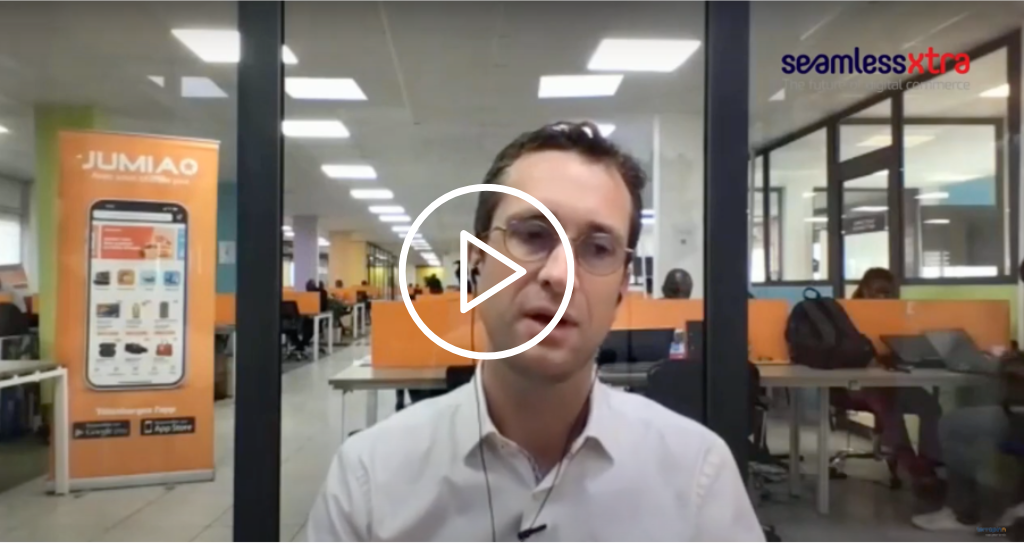
Seamless Xtra’s Micah Edwards speaks to Francis Dufay, CEO at Jumia Group. Jumia is a Pan-African technology company that is built around a marketplace, logistics service and payment service.
Francis, you will be joining us at our Seamless Middle East show this year, which will take place at the Dubai World Trade Centre from May 14th to 16th. Jumia has a huge presence within the Pan African region and had a significant impact. With that in mind, how can e-commerce businesses serve the specific needs of very diverse consumers rather than just copying your standard e-commerce recipes?
E-commerce is one easy word, but behind this word, there’s a very diverse industry. There’s one basic, common denominator, which is, all companies are selling something via some online platform. But even at that the industry is so diverse because it’s selling any kind of product in any kind of market to very different customers with very different behaviours, purchasing power, taste, and more. So e-commerce is actually a very broad topic. And when you think of copy pasting recipes, we’re actually thinking of the big names. like Amazon, but they’re just a part of the e-commerce landscape. If you look around, there’s thousands of very different business models.
In our case, for Jumia in Africa, we’ve developed a business model that’s very different from what you may have in mind from other names. We’ve adapted to very different market context, we’ve adapted to different purchasing power and different supply. We’ve adapted to very different ways to reach out and communicate with customers. So there’s actually no standard blueprint for e-commerce across the world. And I think it’s an industry that’s changing all the time. There’s so much innovation coming from tech that’s enabling the business, that this industry is being reshaped pretty much on a yearly basis.
You have now big players that everyone’s discovering across the world that were a bit below the radar a few years back but the landscape is changing extremely fast. There are very different consumer tastes and anyone who can adapt best to specific segments can take over part of the market. So there’s definitely no one size fits all approach for e-commerce.
What advice can you give businesses who would really like to embrace each customer specification and tailor their presence to each different type of customer within the e-commerce landscape?
It’s difficult because in many instances you build a business and then you realise consumer tastes are changing. So, you have to be able to rebuild, which, for managers is a very complicated case. You build something quite complex with lots of tech, infrastructure, logistics, and so on. Yet, you need to be able to realise maybe one year later that consumer demand is a bit different and we’re not exactly matching what people want. As a result, you need to be able to make very tough decisions, destroy a bit of what you’ve built and be able to rebuild in a way that fits better the needs of your customers. This makes it a very challenging business for managers. You need to be willing and able to change all the time and cannot hold on to what you’ve built five years ago. It’s irrelevant today.
What would you say is the best way of establishing a good global or regional interconnectivity to foster cross-border trade?
Well there’s no great recipe for that. Jumia is operating only in Africa, across 11 markets. And I can tell you that the interconnectivity is complicated. It depends on many different players. It depends a lot on our regulatory setup that we have in our markets. I think it’s been made relatively simple across many markets. It’s relatively easy to send goods to the U.S. or to the Schengen area in Europe with pretty standard procedures with customs and relatively simple entry. In other jurisdictions, where we have to deal with more fragmented markets regulation has not been designed to make it easy for e-commerce to get in.
So it’s a challenge but the thing is to find markets where you can actually operate and build the right value proposition for consumers and add volumes to the supply chain. But, at least where we usually operate, the lack of one single framework, particularly on the regulatory side is a big challenge.
One of the topics as well, that is big at the moment in e-commerce and within the Seamless agenda is innovation. Within Jumia group how important is innovation in making sure that you gain success within your specific market?
Well, innovation is always a balance. When you’re running a company that’s operating for several markets that does payments, logistics, marketplace, and so on, you have to find the right balance between innovation and some level of standardisation and rigorous operations. It cannot be a free for all where you are experimenting as you wish because there are rules and packages that need to be delivered in a compliant and efficient way. We’re trying to make sure that we get the basics stable and enforced across the company and leave the right amount of space so leaders in each country can innovate at their scale in a way that we’ll be able to pick up and replicate across other countries. Whatever cannot be scaled should not be experimented.
It’s a very fine line for me as a CEO giving my managers the right framework that needs to be abided by while giving enough room for innovation and experimentation. Jumia as a company has been built through experimentation, through trial and error which enabled us to find lots of amazing things and to serve our African consumers way better than if we had come to Africa with a standard playbook that you mentioned earlier.
We’ve been experimenting in many areas, however, not only in tech, that makes us much more relevant to our consumers. Lately, one of our best marketing channels is printing catalogues. For example, that’s very low tech. It’s actually a way of addressing very cost conscious customers living outside of the big cities with poor connectivity. That kind of innovation happened at the scale of one country then was rolled out across all the countries. So that’s why it’s important to leave some room and make sure that you don’t smother innovation because you need to standardise and you need to reduce risk.
Francis, I will see you at Seamless Middle East on the 14th and the 16th of May at Dubai World Trade Centre. You will be joining us for the Keynote Panel around transformational leadership in the digital age. Can tell the audience why they should be excited about this and what they can hope to learn?
Well, I think it’s a great opportunity to meet leaders in tech and e-commerce from across the world, particularly from emerging markets and by being very well positioned to get all of us there. I’m very much looking forward to meeting peers and other leaders in the industry in our field. In terms of what Jumia can bring to the event, well, the company is an eventful story with ups and downs. It’s a story of resilience and extraordinary adaptability through innovation. Even quite recently we completely redesigned and remodelled the company with a massive turnaround. As we discussed before, you have to innovate and change all the time because this business is so competitive. Technology is evolving so fast. Consumers are changing faster than ever. So while it’s a story of constant experimentation and innovation, it’s also a story of decisions. It’s a beautiful story with lots of change and tough times as well but that’s the price to pay if you want to succeed in commerce.