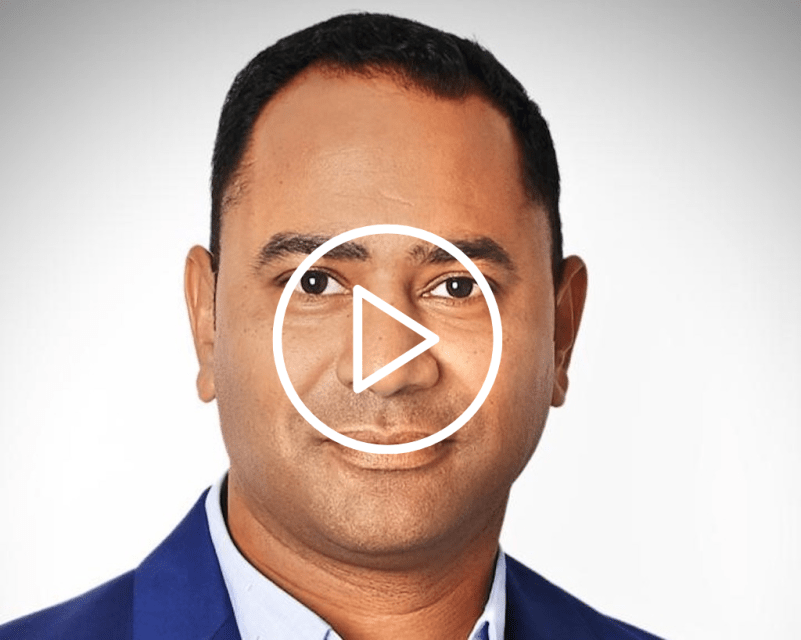
Seamless Xtra’s Alia AlHussein speaks with Deven Moodley, Executive Head of Financial Services at PicknPay. With his extensive experience and leadership at one of South Africa’s largest retailers, Deven brings invaluable insights into the evolving landscape of financial services in the retail sector.
In this interview, they discuss diversifying payment channels, promoting financial inclusion, and the steps needed to transition towards a cashless economy.
Welcome, Deven. Thank you for being here with us. So just to start, considering PicknPay’s stature as one of South Africa’s largest retailers, how pivotal is the diversification of payment channels and what emerging customer behaviours are shaping payment trends?
PicknPay, one of the oldest retailers in South Africa, has quite a diverse and far reaching number of estates with just close on 2000 stores and an online presence and multiple online type stores. You know, having a diversification from payment channels is quite crucial for our customer reach.
Now, this does play a bit of competitive advantage as we extend our ways to pay capabilities that takes array of different digital and physical kind of payments, but it also helps us in meeting our customer expectations when it comes to affordability. Being one of the leaders in retail, grocery retailing, specifically in South Africa, offering these multiple payment options, such as mobile payments and contactless digital wallets and buy now pay later enhances convenience and accessibility for our customers.
Now, among the emerging customer trends, there has been a growing preference towards digital and contactless transactions, largely through speed and security. So while the rise of the smartphone usage has led to a lot more mobile wallet capabilities, the pandemic actually accelerated the shift towards contactless for personal hygiene reasons because nobody wanted to touch a pad and enter a pin number.
And that really helped many retailers transform what was once known as quite clunky kind of payment capabilities inside. So expanding that range is quite important. And alongside that, there’s a notable trend towards an integrated financial services where customers seek seamless experiences combining shopping and financial management.
So you can now do most things that you couldn’t do even three years ago in a retail store quite frictionlessly. So for sure, the landscape around evolution of payments has rapidly increased over the last three to four years.
Thank you, Deven. Another important topic we should mention is finaincial inlcusion. In what ways does Pick and Pay actively promote financial inclusion by leveraging advancements in financial services, like banking services, insurance, mobile, NVNO, and ways to pay? Can you explain how retailers contribute to broadening financial access?
Look, PicknPay has always and will always promote financial inclusion, and we do this through several innovative strategies. For instance, we’ve introduced services such as banking through various partnerships. One of the fastest growing Neobanks in South Africa and even in the world, TymeBank had its roots inside of PicknPay.
And here we saw an opportunity to extend a low cost banking product to the underserved communities in South Africa. Further to that, we’ve also introduced a type of bank in many branches where traditional banks have found some space in PicknPay and we continue to change the way in which we operate from our retail landscape.
Now, what you are allowed to do in these stores is somewhat different to what you would do in a traditional bank. We have cash in and cash out at every single lane in PicknPay, which makes it super convenient and safe for customers to access cash at every single point of sale. But you can also open up an account and do some basic transaction capabilities inside a retail store, as well as some services associated with banking.
So the emergence of both retail and banking have started to come together in quite a super way for consumers. It’s a win win. They can bank where they shop and it really works well. Further to that, we ventured into insurance and mobile, specifically having PicknPay Mobile, which is our own mobile virtual network operator with MTN providing the rails for that.
Now that allows us to provide affordable insurance and mobile plans to underserved communities. And when we integrate these services into the retail environment, not only do we enhance the customer convenience, but we also make financial services more accessible to the broader demographic. And that is what true financial inclusion is all about. It’s not just about putting a bank account in front of a customer that didn’t have one previously, but it’s also opening up other financial services to them where they would technically be locked out of it. Now, we play a quite a critical role in broadening financial access, because not only do we have the footprint and the consumer, we also have rich data sets so we can understand exactly what customers want and how we can then fulfill that.
Partnering with various banks and financial services institutions allows us to do that. That’s how we can grow and foster greater financial inclusion. For us, empowerment, because an empowered consumer can do so much more in the community in which they operate it. So retailers play a pivotal role when it comes to financial inclusion.
Thank you, Deven. To round up and touch on a cashless society, what collaborative measures must retailers, banks, third party providers and regulators implement to transition effectively towards a cashless economy?
Great question. The notion of a completely cashless society is one of financial exclusion because there will always be consumers and a demographic that won’t adopt to digital payments or completely eradicate the use of cash. And you can imagine not getting access to basic healthcare facilities or pharmaceuticals or groceries if you’re not allowed to use your cash.
So I think a perfect cashless society in the next 20, 30 years is a utopia that will probably never happen, but a largely cashless society is certainly on the horizon. And I would say within the next two to five years, you will see predominantly more cashless transactions occurring and the growth rates have started to already emerge. In PicknPay, for example, a little over 18 months ago, digital payments was less than .5%. Today, it accounts for 3% of the transactions that we use in, in our stores. So 3% comes from some form of digital payments. And I’m actually not talking about Apple Pay, where you are just tapping your phone, because that runs on card rails. I’m talking about real digital payments, using QR codes, using wallets, etc.
But to really transition towards a cashless society, this requires a coordinated effort across retailers, banks, third party providers, and the regulators. And these can be probably summarised in a few areas:
Standardisation and Interoperability
So one, we definitely need to further standardisation and interoperability which means developing common standards and protocols for payments systems to ensure that there’s seamless transactions across different platforms. This is quite important because the level of standardisation that one needs to introduce comes with a lot of costs. So it’s certainly a big investment, but certainly in the right direction in which many organizations are moving. To have a cashless society you need to build security and fraud prevention making mechanics.
I can’t underscore this enough because implementing robust security measures to protect against fraud and cyber threats gives customers a sense of security. Their money is safe. The systems work. They’re not going to be hacked. So we certainly think that with this ecosystem that gets built across digital payments, the trust that comes from the activities associated with security and fraud prevention are quite important.
Regulatory Frameworks
And then, of course, there are regulatory frameworks because one can try all kinds of innovations, but legislation always tries to put some guardrails in place. But this is important because as there becomes more and more ownership and consumer awareness around data and how data is managed and security around platforms and ecosystems, consumer rights must remain at the centre of this. So what the security regulatory frameworks seek to bring is peace of mind to consumers that while they hand out their data and the information, it’s being treated in in quite a fair way and a rigorous way.
Consumer Education
Another important aspect is consumer education. Now we develop technology and put a lot of smart tech in customers hands at our point of sale online. But if you don’t build customer education about how consumers need to engage and utilize these various types of payments, we will never get the adoption that we’re looking for. Now, I think what’s important here is that retailers play a role in this because there is a relationship with banks. There’s a very limited relationship when it comes to various other service providers, but customers come to trust retailers and where they purchase their goods and service.
So the role that we play there is quite important. And there are other aspects like infrastructure development and incentives and accessibility. But if you think about it in short, creating the right security, developing the right education for consumers, managing their data in a responsible and robust way. Those are the key tenants that will help us pull towards a cashless economy.
And finally, what trends are you seeing at PicknPay in terms of cash transactions and how would you describe your payments philosophy overall?
At PicknPay, cash is still quite significant, more than 70 percent of the volume of transactions in which PicknPay processes is in cash. But we’ve seen a huge growth towards digital payments. Card is still significant in our world. But, with the right aspects, we’re putting in our ways to pay programme I think we’re giving them a broader spectrum to utilize whatever they’re most comfortable with in a retail store. It’s a philosophy of never saying no to a customer. So whether you choose to pay with a cryptocurrency like Bitcoin or whether you choose to pay with buy now pay later, you can.
Although we do segmentize the type of products. So for example, we will only use a buy now pay later on white goods and general merchandise and not on groceries because it’s not promoting the right kind of financial wellness, to be honest. So in short, those are the tenants that will help us pull towards a cashless society.
Thank you, Deven. This has been an incredibly insightful and valuable conversation. We’re excited to have you back at Seamless Africa in October in Johannesburg and to hear you on stage.