
Abdelrahman, you founded Credify in July 2022 and officially launched last year with a mission to help credit lenders onboard applicants into financial products. What initially sparked this idea and drove you to introduce this solution to the Egyptian market?
Yes, it all started with some exposure we had to regional markets, in particular African markets, in Nigeria and Kenya. We saw in Sub-Saharan Africa that they suffered one of the most common problems in fintech today, which is unbankability. Most of the adult population are unbanked and don’t have access to financial services. And when we were exposed to these markets, we saw very novel solutions that attempted to solve that problem.
In Egypt the official number of unbanked is also very high at 40%, but the real number could be between 50 and 60%. Egypt is a really big market for us and it’s even bigger in Africa where there’s almost one billion people and more than half of them are unbanked. This could mean you don’t have a bank account, or it could mean that you don’t have credit history which is a classic catch 22. Obviously, if you don’t have a credit history you can’t get finance and if you don’t have evidence, you don’t get credit history.
So this is where Credify comes in?
Yes, we’re an AI data company. We’re solving a problem in the fintech space, but primarily we’re a data and tech company. We help fintech companies that are looking to sell digital financial products get more accurate data on users so they can score them better. This then increases their chances of them being on boarded into financial products. So instead of just selling financial products to the top five percent who are able to get financial products they can sell them to more people.
What we do is we use what we call alternative data; data that bankers or people who are in credit don’t really look at on a daily basis. This alternative data is basically data that is stored on your phone and it’s the one thing that is common between you and all of the people who are unbanked. You might have a bank account, you might have credit history but there are lots of other people who don’t. The one thing that, you do have in common, however, is you have a smart device. And that device holds a lot of data that can describe a lot about you
Data is clearly very important to your business model. Can you explain how you gather and analyse this?
We have a tool that we can attach to any app. So for instance, many fintech companies will have an app that users download on their phone. What we do is we put attach our add-on to the app so suddenly our add-on is in the mobile device all of their users. With the end user’s permission, we access their data. We take their data, we analyse it, and we analyse all that unstructured metadata on their cell phone. Then we put it into the form of a report that describes the behaviour of the person in terms of credit worthiness.
What are some of the metrics that you look at then to see if this tool is having a real impact?
One thing we look at is the number of people who were unbanked that would have been rejected before we introduce our tool. We measure how many of those now have an increased chance of being accepted and push them into bankability. When we work with a company, they only use us as a fallback mechanism. They do their own internal scoring and if they decide to reject a user from a financial product, only then do they use our tool.
So if the person was unbanked to begin with and was rejected, the company comes to us to solve the problem. We wait six months or eight months and examine their behavior to make sure they are credit worthy. Once they are accepted by Credify, they are pushed back into bankability and accepted by the company as well. So far we’ve had amazing results. We’ve been able to push 300 to 500 customers into bankability with one company that we integrated with and there hasn’t been any default rate.
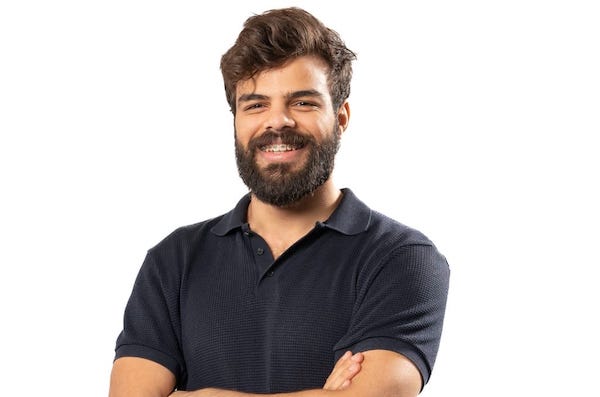
Credify Co-founder, Abdelrahman Rashwan
But you said that you’ve seen kind of similar models in Africa and Southeast Asia. What differentiates Credify?
Yes, the model already operates in a way in Southeast Asia and Sub-Saharan Africa and usually shines in third world countries. Although the model isn’t as novel if you look on a global scale it’s definitely very new in Egypt. We’re the first people to do it here so we are very proud of that. We saw every element in what was working elsewhere and some things that we don’t agree with. Then we localized it to be able to conform to the Egyptian market. And later we will do the same for the rest of the North Africa.
In Egypt, the regulatory environment is still rapidly evolving. As a start-up with such a new concept, what are some of the challenges you are facing?
Well, first of all, the ambiguity of regulations, that’s number one, specifically for newer models, as you say. And, the second problem is arbitrary regulations. This means that when it comes to regulators, the default answer is no, until it’s yes.
When somebody tries to do something new, that probably means it’s not regulated and as a result that means it’s not a yes. So start-ups tend to operate in a grey area until they’ve had some success, and then they push for regulation. Then they conform to whatever new regulation that happens. You break the cycle by just operating down low until you’ve had some success, and you have some leverage to speak with the regulators and ask them for a regulation.
So once you have some proof of concepts across the world, you can say to regulators we would like to help you, we would like to give you some case studies so you can look over them before providing that regulation.
It is still quite early days, but regulation aside, what are the next steps for Credify?
Our vision is that we would use Egypt as our proof of concept because this is our home country. If we don’t succeed here, we’re not going to succeed anywhere. But we do have regional expansion on our scope. The beauty of Egypt and where we are is that it could be either an African expansion or an Arab expansion. In the meantime, we don’t need to conform to an identity. We will continue to engage with stakeholders, raise awareness of our solution to bankability and develop trust in our model