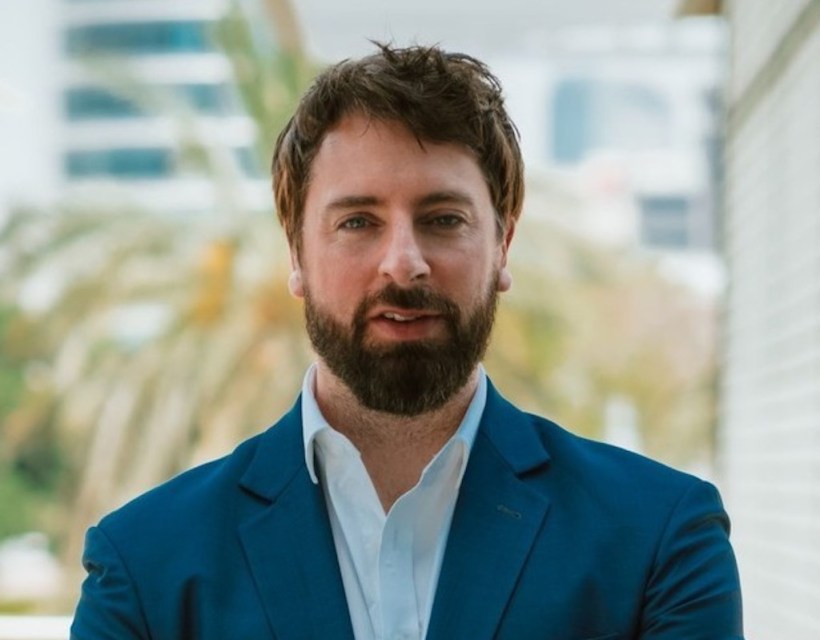
Kevin, last month, Hubpay announced that it is launching a digital global currency account for UAE-based businesses. Among its key features, this account will includes a virtual IBAN number. Can you tell me why this is so significant?
Sure, we launched a B2B platform last year but HubPay has been trading in the UAE for about three years now. Our capabilities have materially increased every few months, as we’ve expanded our network and our platform. We can settle in any currency globally. But recently the development of getting access to virtual IBAN’s which we’ve done through international partners enables any of our customers to have a named account. So at present we have a client money account, which is HubPay and any customer we have will be sending money in and out of a HubPay account.
With a virtual IBAN, it has all the benefits of a bank. So you have your own named account. So if you’re ABC limited, you have that account, but you have that account in now 40 different core currencies, and you can send on to any other kind of currency internationally.
HubPay was founded in 2019. You received your license for digital money services in 2020 How has the company evolved since then? Are you still very much focused on the same goals?
I think our core mission remains the same. We’re keen to drive financial inclusion by building a cross-border wallets and platform across the region. We got our in-principle approval in 2019, but then our full license in 2020. And then we launched properly really in January 2021. Initially, we started with retail, and then we expanded out to business.
But if you look at a lot of the international fintechs that have been quite successful. They followed a similar kind of pattern. The likes of a TransferWise in the UK, or a Revolut, um, and N26 in Germany, and Alipay in China. They’ve leveraged customer group for the other. And the larger we get, the better our capabilities and the better it helps each customer segment.
So we’re still active in retail and in corporate, we’re both, we’re licensed now, both in the UAE and Pakistan. We hope to launch businesses in Pakistan later this year, and we’ll be going in for a Saudi license as well. And so the core mission remains the same. Our capabilities have just expanded out as we’ve grown.
In terms of the global money transfer market there seems to be a lot of change happening now?
I think the UAE and the broader Gulf market is at a real turning point. The UAE has always been a huge retail remittance hub. One of the largest countries globally. It normally comes in at third or second, sometimes, in terms of retail remittances. And that’s because most of this country are immigrants. And that kind of trade flow is coming from sending money home. On the corporate side, it’s been steadily increasing as the UAE has become a trade hub.
It’s got an enormous advantage in its geographical positioning centered in between Europe, Africa, and Asia. The infrastructure developed across the airports, the seaports, the free zones like Jebel Ali or DMCC means the country is very well set up for everything from airlines to agro commodity businesses and this has steadily increased year on year.
However, we think the financial services are a good bit behind. If you look at the global solutions in most markets, there’s a whole variety of fintechs that can offer everything from seamless trade finance to global accounts to derivatives and in that market, we just don’t see it.
There’s very few in the fintech space. We only really see one other as our competitor in the B2B market so we think there’s significant scope to adding value and solution in this market by offering a very strong FX platform, featuring virtual accounts, featuring FX Forwards to a wide range of businesses and we think there’s significant growth ahead.
The Middle East really is a hub for so much activity right now. What are some of the key developments you see happening in the region to encourage innovators like yourself?
Absolutely, I think also the seismic shift we’ve seen in Saudi Arabia in the last few years in terms of that opening up as an economy and also bringing a regulatory framework for fintechs has only amplified the UAE’s presence because it just drags more trade into the whole region and more cross border flows.
I think what we’re very interested to see is how new industries develop out. One of the real positive elements in the UAE has been their approach around cryptocurrency. Cryptocurrency is not actually something we trade with ourself. But working with cryptocurrency businesses from a fiat point of view, we’re very open to. The licensing framework they’ve made on top of that solid foundation they already have from good free zones, very good infrastructure and people enjoy living and staying here – I think this is going to create a major hub for cryptocurrency.
Some of the other economies globally have been a little bit too reticent in opening up a cryptocurrency or have given mixed messages on a regulatory framework, I think the UAE has done a very good job of driving that. And what that does is it doesn’t just build up cryptocurrency, it ends up driving in engineers, coding, a broader ecosystem that then starts driving change and accelerating the kind of growth in other kind of tech industries. So we’re very excited about some of those sectors expanding.
What is the next step for HubPay then and how are you planning to further position yourself in the market?
We will continue to expand the virtual accounts. At the moment we’re offering across about 40 currencies. I’d say there’s two other big milestones we’re going to have this year.
One is connecting our virtual accounts up with our collection capabilities in Africa. We’ve got the ability to collect currencies from Nigeria, Kenya, Tanzania, countries that the UAE is trading significantly with, and that’s expanding at quite a rapid rate. And so I think connecting that infrastructure of virtual IBAN’s or global money currency accounts with collections businesses in Africa will be a major expansion of the platform’s capabilities.
Secondly, is derivatives. We’ll be offering FX forwards later this year, which we’re really excited about. We’ve already got very strong partners on board to do that and that’s a key solution. So I think by the end of the year we’re going to have one of the best FX platforms across this market serving a wide range of industries in the UAE.
……….