
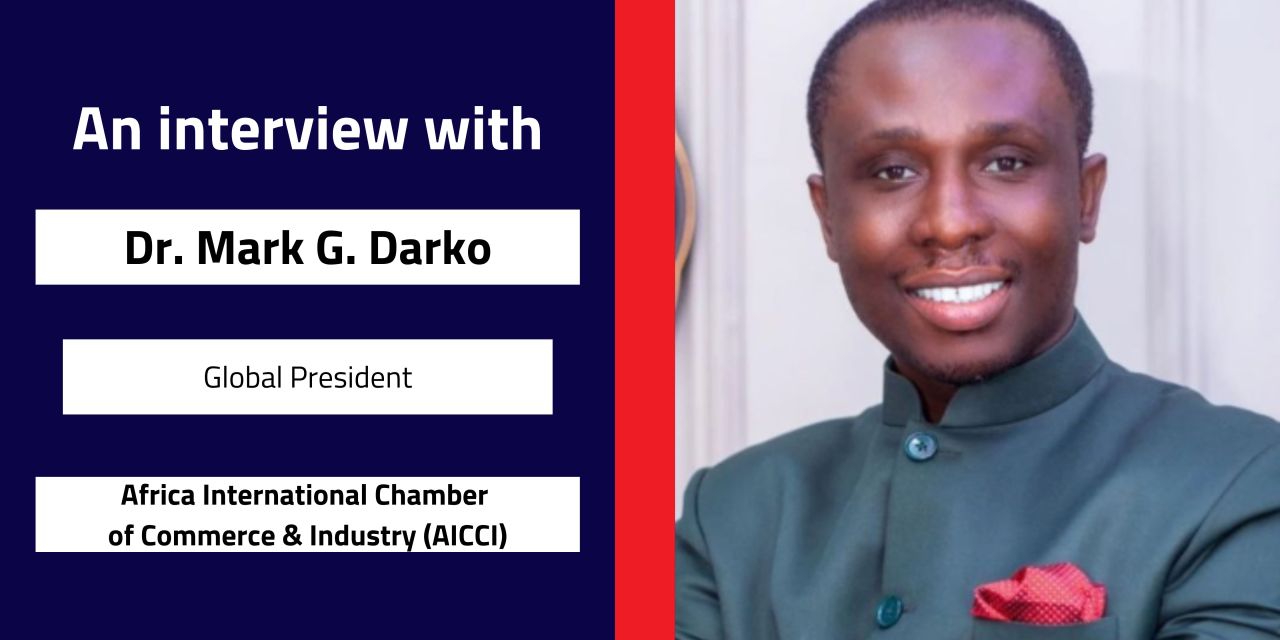
Seamless Xtra’s Ellise Philips interviews Dr. Mark G. Darko, Global President of AICCI.
Dr. Mark G. Darko, as the Global President of AICCI, stands at the intersection of international commerce, innovation, and development in Africa. With his extensive network and collaborations with key stakeholders—including the Kenya Chamber of Commerce, financial institutions, and government entities—Dr. Darko is uniquely positioned to address critical challenges facing businesses in Kenya and East Africa.
In this exclusive interview, we delve into the potential of digital currencies, the complexities of investment banking, and the transformative opportunities for Kenyan SMEs and start-ups. We explore strategies to foster international trade, harness the power of digital wallets, and advance East Africa’s economic integration into the global marketplace.
Driving Digital Innovation and Economic Growth – Kenya’s Financial Landscape and the Future of Commerce in Africa
1.As the President of AICCI, what inspired you to take on this role, and how does your work align with Africa’s broader economic transformation goals?
My decision to take on the role of President at AICCI was inspired by a passion for driving economic transformation in Africa through innovation, collaboration, and inclusive growth. I recognized the immense potential within the continent’s resources, its people, and its markets, and I wanted to be a catalyst for change. AICCI’s mission aligns with Africa’s broader transformation goals by facilitating cross-border trade, promoting sustainable practices, and fostering partnerships between governments and industries to unlock untapped potential and achieve long-term economic stability.
2. What unique challenges and opportunities do you see in East Africa compared to other regions on the continent?
East Africa presents a unique combination of challenges and opportunities. On one hand, the region has a young, dynamic population, robust mobile technology adoption, and a growing entrepreneurial ecosystem, making it fertile ground for digital innovation. On the other hand, challenges such as fragmented regulatory frameworks, inadequate digital infrastructure, and disparities in access to financial services hinder progress. The region’s ability to embrace collaboration and innovation will determine its success in overcoming these challenges.
Digital Commerce in East Africa:
3. Digital marketplaces are transforming commerce in Kenya and East Africa. How can businesses and governments collaborate to optimize these platforms?
Collaboration between businesses and governments is essential to optimize digital marketplaces. Governments should establish clear regulatory frameworks that promote innovation while ensuring consumer protection. Businesses, on their part, should prioritize user-friendly platforms that cater to local needs and embrace public-private partnerships to enhance digital infrastructure. Joint efforts in capacity building and digital literacy will also be key to driving widespread adoption and growth.
4. Unified commerce is gaining traction globally. How do you see this concept being adapted to meet the needs of East African consumers?
Unified commerce in East Africa can thrive by integrating online and offline channels to provide seamless customer experiences. For example, integrating mobile payment platforms like M-Pesa with e-commerce solutions ensures convenience for consumers. Additionally, leveraging data to personalize experiences and improve supply chain efficiency will be critical. The adaptability of East African consumers to mobile technology positions the region well to embrace unified commerce.
5. Cross-border trade is vital for economic integration. What steps can be taken to enhance digital infrastructure and streamline trade across the region?
To enhance cross-border trade, governments must prioritize investments in digital infrastructure, such as high-speed internet and interoperable payment systems. Simplifying trade regulations and adopting regional frameworks like the African Continental Free Trade Area (AFCFTA) are also critical. Furthermore, fostering partnerships between technology providers, logistics companies, and financial institutions can streamline processes, reduce costs, and improve efficiency.
Financial Inclusion and Mobile Payments:
6. Mobile payments, particularly platforms like M-Pesa, have revolutionized financial inclusion in Kenya. What lessons can other African nations learn from this success story?
The success of M-Pesa demonstrates the importance of addressing local needs with tailored solutions. Key lessons include:
- Building partnerships with telecom providers to extend financial services to unbanked populations.
- Ensuring platforms are simple, secure, and accessible, even for those with limited digital literacy.
- Encouraging governments to create supportive policies that foster innovation while ensuring consumer protection.
7. How can digital wallet adoption be expanded to rural and underserved communities in East Africa?
Expanding digital wallet adoption requires improving access to affordable smartphones and reliable internet. Governments and private sector players must invest in digital literacy programs and partner with community leaders to build trust. Creating localized solutions that cater to rural needs, such as agricultural payment platforms, will also drive adoption.
8. The “Buy Now, Pay Later” (BNPL) model is growing. What are the risks and opportunities of implementing this in East Africa’s unique financial landscape?
BNPL offers opportunities to improve affordability and drive consumer spending, particularly for young and underserved populations. However, risks include over-indebtedness and a lack of financial literacy. To mitigate these risks, businesses should provide clear terms, and regulators should monitor the sector to ensure fair practices.
AI and Data in East African Transformation:
9. Artificial intelligence is transforming digital commerce and financial services. How can East Africa leverage AI to create more inclusive and efficient systems?
East Africa can leverage AI by developing localized solutions that address challenges such as financial exclusion and inefficiencies in supply chains. AI-powered chatbots can improve customer service, while machine learning can enhance credit scoring for underserved communities. Investments in AI education and collaboration with global tech companies will accelerate adoption.
10. Big data analytics is often touted as a game-changer for businesses. What role do you see it playing in driving hyper-personalized commerce in the region?
Big data analytics enables businesses to understand consumer behavior, preferences, and needs at a granular level. In East Africa, it can help companies design targeted marketing strategies, optimize pricing, and improve product recommendations, ultimately enhancing customer experiences and boosting loyalty.
11. How can businesses ensure ethical AI use while driving innovation in East Africa’s digital economy?
Businesses must prioritize transparency, accountability, and inclusivity in AI deployment. Establishing ethical guidelines, ensuring diverse datasets, and engaging stakeholders—including governments and consumers—will be crucial. Regular audits and adherence to global best practices will also help build trust in AI systems.
Sustainability and Green Finance:
12. Sustainability is increasingly important in commerce. How can East African businesses adopt greener practices while remaining competitive?
Businesses can adopt greener practices by integrating sustainable supply chains, using renewable energy, and minimizing waste. Governments should incentivize such practices through tax breaks and grants, while consumers must be educated on the value of supporting eco-friendly brands. Collaboration between all stakeholders will drive both sustainability and competitiveness.
13. Green finance is a growing focus globally. What role does AICCI play in promoting environmentally sustainable financial practices across Africa?
AICCI advocates for green finance by engaging policymakers, financial institutions, and businesses to prioritize sustainability. We facilitate knowledge sharing and support the adoption of green bonds, carbon credits, and sustainable investment frameworks. Our goal is to make sustainability a core component of Africa’s economic growth strategy.
14. How can digital infrastructure and innovation contribute to both economic growth and sustainability in East Africa?
Digital infrastructure enables efficient resource use, reduces waste, and fosters transparency in supply chains. For example, blockchain can track sustainable practices, while IoT can optimize energy use. By embracing digital innovation, East Africa can achieve economic growth while minimizing its environmental footprint.
Leadership and Future Outlook:
15. What leadership advice would you give to entrepreneurs and business leaders in East Africa looking to expand their operations in the digital space?
Focus on understanding your target market, embracing innovation, and building strong networks. Collaboration is key—partner with like-minded organizations to scale your impact. Finally, invest in talent development and remain adaptable in the face of technological advancements.
16. What future trends in digital commerce, AI, and financial inclusion excite you the most, and how do you see these shaping East Africa’s economy?
I am particularly excited about the integration of AI with mobile payments, the growth of decentralized finance, and the potential of blockchain to enhance transparency. These trends will drive financial inclusion, foster trust, and unlock new economic opportunities across the region.
17. What role does AICCI play in fostering cross-border collaboration and innovation among businesses in East Africa?
AICCI provides a platform for dialogue and collaboration, connecting businesses with policymakers and international partners. Through initiatives like trade summits, capacity-building programs, and knowledge-sharing forums, we foster innovation and help businesses navigate challenges in cross-border trade and digital transformation.
The Role of AICCI:
18. AICCI focuses on bridging industries and governments. Can you share examples of successful initiatives that have driven positive change?
One example is our partnership with the African Union to promote sustainable financing for green energy projects. We have also facilitated trade agreements that enhance cross-border commerce, particularly under the AfCFTA framework. These initiatives have had measurable impacts on economic growth and regional integration.
19. How does AICCI plan to support East African businesses in navigating challenges like regulatory frameworks and digital transformation?
We provide advisory services, advocacy, and training programs to help businesses understand and comply with regulations. Additionally, we host forums to engage policymakers on creating supportive environments for digital transformation.
20. Finally, how do you envision Africa’s position on the global stage evolving in the next decade, particularly in digital commerce and sustainable development?
Africa is poised to become a global leader in digital commerce, driven by its youthful population and rapid adoption of technology. In the next decade, I foresee Africa being a hub for innovation in fintech, AI, and green technologies, contributing significantly to global economic and environmental goals
……….
Subscribe to the Seamless Xtra monthly NEWSLETTER
……….