
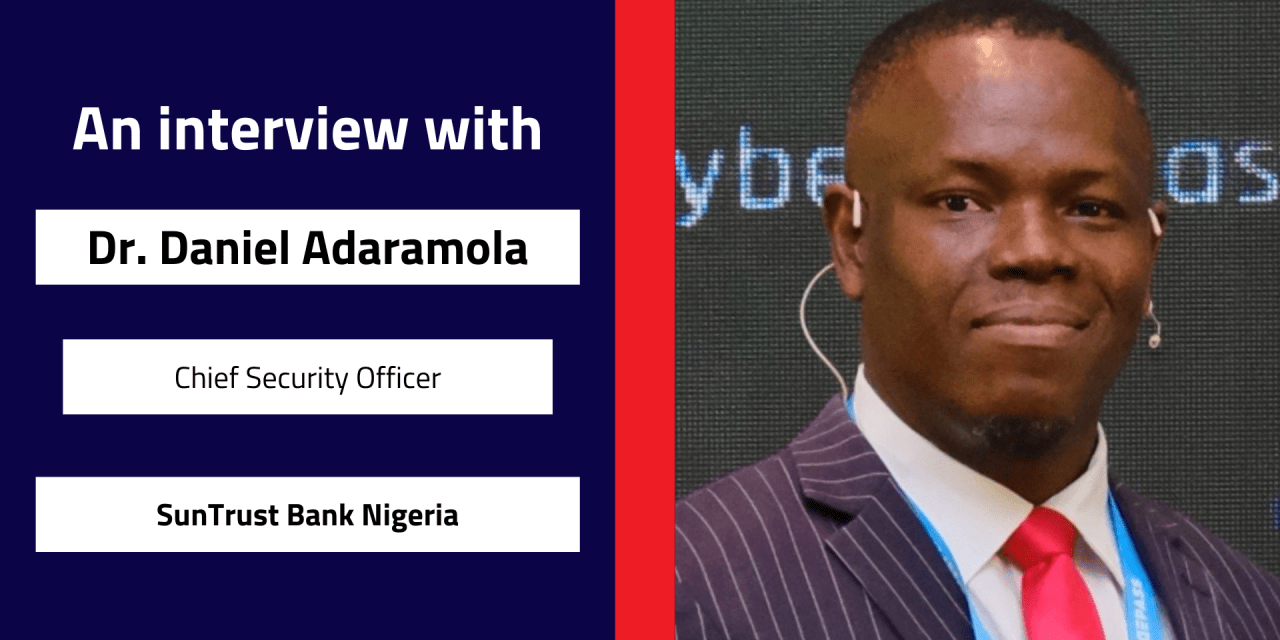
Seamless Xtra’s Ellise Philips interviews Dr. Daniel Adaramola, Chief Security Officer of SunTrust Bank, Nigeria.
Dr. Daniel Adaramola is a leader in cybersecurity and financial technology, who has extensive expertise in safeguarding digital ecosystems and advancing secure, inclusive financial services.
In this exclusive interview, we’ll explore the evolving landscape of payments, fintech, and digital transformation, with a particular focus on how cybersecurity can drive financial and digital inclusion across Africa. We’ll also discuss the unique challenges and opportunities within the East African landscape compared to Nigeria, covering critical topics like mobile money, digital wallets, and the future of financial technology.
Securing Africa’s Digital Future
Introduction and Background
1.Could you share your journey into cybersecurity and your role as Chief Security Officer at SunTrust Bank Nigeria?
My name is Dr Daniel Adaramola, I am currently the Chief Information Security Officer, CISO at SunTrust Bank Nigeria; I am responsible for strategy formulation, strategy execution, and providing thought leadership for the Bank’s cybersecurity program.
Prior to joining SunTrust, I worked as the Chief Information Security Officer of four organizations; these include Unity Bank Plc, Enterprise Bank, Heritage Bank and eTranzact International Plc. My work with eTranzact, offered me a unique advantage, helping me attain an advance knowledge of payment switching networks having worked across five geographies including United Kingdom, Nigeria, Ghana, Cote D’Ivoire, Zimbabwe and South Africa.
2.How has your work in Nigeria prepared you to address the challenges and opportunities in financial security across Africa?
Having worked in the industry for over 22 years, I would say I have a firm technical understanding of the various technologies that drive the payment sector.
I have helped organizations I worked with innovate in the areas of channels, and alternative product scheme. I have also supported to promote financial inclusion by helping to accelerate the availability of banking and financial services to the unbanked via the Agency Banking. In my Industry Influencer role, I have served as a two-time Executive Committee (EXCO) Member, of the Committee of Chief Information Security Officers of Nigerian Financial Institutions. I am also the pioneering General Secretary of the Committee of CISOs in Nigeria. In the last 10 years I have been involved several industry initiatives.
Payments and Mobile Money
3.Mobile money is a cornerstone of financial inclusion in East Africa. How does its success compare to Nigeria’s approach, and what lessons can be shared?
Mobile money has indeed become a cornerstone of financial inclusion in East Africa, especially in countries like Kenya, where M-Pesa has revolutionized the way people access financial services. The success in East Africa is attributed to several key factors, including widespread mobile phone adoption, and regulatory environments that foster innovation.
In West Africa, particularly Nigeria, mobile money has had a more challenging path due to several factors, prominent is the banking penetration and financial Inclusion: Nigeria has a relatively higher banking penetration compared to many East African countries, meaning there is less perceived need for mobile money services. However, the unbanked population in rural areas still presents a significant market for mobile money services. Building trust in mobile money systems is key. East Africa has demonstrated the importance of user-friendly, transparent systems that educate consumers and create confidence in using digital financial services.
Also, East Africa’s success underscores the importance of creating a supportive regulatory framework that allows mobile money providers to innovate, while also ensuring consumer protection and financial stability. Collaboration between mobile money providers and traditional banks can facilitate a smoother transition for users into the formal financial system and foster greater trust in mobile platforms.
4.Digital wallets like M-Pesa have revolutionized access to finance in East Africa. What role do digital wallets play in Nigeria, and how can their security be enhanced?
Digital wallets in Nigeria provide a key mechanism for financial inclusion, particularly for individuals in rural areas or those without access to traditional banking services. A significant portion of Nigeria’s population is unbanked, especially in rural regions where access to traditional banking infrastructure is limited. Digital wallets provide an alternative for saving, sending, and receiving money, allowing individuals to engage in financial activities without needing a formal bank account.
Digital wallets enable microtransactions, allowing people to pay for goods, services, and even utilities. This is particularly important in Nigeria, where many businesses are small-scale and operate in cash-based economies. Digital wallets play a vital role in enabling both domestic and international money transfers. Nigerians living abroad can send remittances back home through digital wallets, which are faster and often less expensive than traditional methods. Access to Credit and Loans: Some digital wallet platforms in Nigeria also offer access to microloans and other financial products. By analyzing transaction data, these platforms can offer loans to people with little or no credit history. Government Subsidies and Payments: Digital wallets are increasingly used for distributing government payments, subsidies, and social welfare programs, enabling more efficient and transparent disbursement.
In Enhancing Digital Wallet Security in Nigeria, here are some ways. Implementing MFA, such as a combination of passwords, PINs, biometrics (fingerprints, facial recognition), and One-Time Passwords (OTPs), can significantly improve the security of digital wallets by ensuring that only authorized users can access their accounts. Digital wallets should use strong encryption technologies to protect sensitive information, such as transaction details and personal data, both in transit and at rest. This can prevent hackers from intercepting data. Digital wallet providers should perform regular security audits to identify and fix potential vulnerabilities in their systems. This should include penetration testing and vulnerability assessments to ensure that their platforms are secure.
Lastly, raising awareness about the risks of phishing attacks, social engineering, and other cyber threats is critical. Educating users on best practices, such as not sharing their PINs and passwords, and how to recognize phishing attempts, can help reduce the likelihood of fraud.
5.Real-time payments and cashless transactions are growing rapidly. How does your experience in Nigeria inform strategies to implement these systems securely in East Africa?
Drawing from the experience of Nigeria, several insights can inform strategies for implementing secure real-time payments and cashless transactions in East Africa. Nigeria has been a forerunner in digital payments in Africa, and its experiences with mobile money, mobile banking, and digital payment infrastructure can provide valuable lessons for East African countries.
Notable is Nigeria’s Mobile-First Approach: Nigeria’s Experience: Mobile money solutions like Paga, Flutterwave, and M-Pesa in some regions have seen success due to high mobile phone penetration, even in remote areas. Additionally, Partnership with Financial Institutions in Nigeria is a way to go. Collaboration with banks, fintech companies, and mobile network operators (MNOs) has played a pivotal role in expanding access to cashless payments. In east Africa, there should be more strategic partnerships between banks, fintech startups, telecom providers, and regulators. These partnerships are essential for scaling mobile payments and ensuring access to underbanked populations, as seen with the role of Safaricom and the Central Bank of Kenya in M-Pesa’s success.
By drawing on lessons from Nigeria’s cashless transaction evolution, East African nations can better position to implement secure real-time payments. Focusing on mobile technology, partnerships with financial institutions, clear regulations, robust cybersecurity, and financial inclusion will be essential for building trust and ensuring the successful and secure adoption of cashless systems.
Fintech and Financial Inclusion
6.Fintechs in East Africa have driven financial inclusion through innovative platforms. How does the fintech ecosystem in Nigeria compare, and what can each region learn from the other?
The fintech ecosystem in Nigeria, while similar in some respects to that of East Africa, has unique characteristics shaped by its own economic, regulatory, and social environment. Both regions have witnessed rapid innovation and growth in financial inclusion, but there are key differences in their approaches, challenges, and opportunities. Here’s a comparison of the two ecosystems and how each can learn from the other:
East Africa, particularly Kenya with M-Pesa, is a global leader in mobile money solutions. The widespread use of mobile phones as a tool for financial inclusion has been a cornerstone of the region’s fintech ecosystem. M-Pesa enabled millions of people, particularly in rural areas, to access financial services such as money transfers, payments, savings, and loans. Nigeria’s fintech ecosystem is more focused on digital banking and payments, with players like Flutterwave, Paystack, and OPay revolutionizing how businesses and consumers make and receive payments. Nigeria has also seen a rapid rise in digital lenders, e-wallets, and blockchain-based solutions.
Regulators in East Africa, like the Central Bank of Kenya, have been relatively progressive in supporting mobile money services and establishing a conducive regulatory framework. While the Central Bank of Nigeria (CBN) has introduced some initiatives like the Open Banking framework and Cashless Nigeria policies, the regulatory landscape can sometimes be seen as fragmented, with differing rules across the banking, payments, and crypto sectors.
In East Africa, the mobile-first approach to financial inclusion has been highly effective due to the large unbanked population with limited access to traditional banking infrastructure. Services like M-Pesa allow people to send money, pay bills, access credit, and insurance, all via mobile phones. In Nigeria, fintech services are more concentrated in urban centers like Lagos, Abuja, and Port Harcourt, where there is a higher concentration of smartphone users and better internet access. Mobile money has not yet reached the same level of penetration in rural areas as it has in East Africa, although fintech are increasingly targeting these regions. East African fintech have been particularly successful in reaching rural and underserved populations. M-Pesa’s partnership with local agents for cash-in/cash-out services ensure broad access. Digital payments in Nigeria have seen significant adoption in e-commerce, where mobile wallets and platforms allow seamless transactions for goods and services. Additionally, Nigeria remains a key destination for remittances, with fintech companies leveraging this sector.
In conclusion, both regions have played pivotal roles in advancing financial inclusion in Africa through fintech innovation. While East Africa’s focus has been on mobile money to bridge gaps in banking access, Nigeria’s fintech ecosystem is thriving in the realms of digital payments, lending, and blockchain technology. Both regions can learn from each other’s successes and challenges to create even more inclusive, efficient, and innovative financial ecosystems across the continent.
7.Open banking is transforming customer engagement. What security considerations should East African fintechs prioritize when adopting this model?
Key security considerations that East African fintechs should prioritize when adopting the open banking model includes, data minimization- only collect and store the minimum amount of personal data necessary for providing the service and ensure that sensitive data is only shared with authorized entities.Strong customer authentication (SCA) mechanisms, such as multi-factor authentication (MFA) or biometric verification, should be used to ensure that only authorized users can access accounts or initiate transactions
Open banking heavily relies on APIs, so it’s crucial to use strong authentication protocols like OAuth 2.0 to secure the communication between parties (e.g., banks, fintechs, and third-party providers).
Offering Vendor Due Diligence is also paramount. Fintechs must assess the security posture of third-party providers involved in open banking services. This includes ensuring that third parties adhere to security standards and regulations (like GDPR or local data protection laws). Fintech must Implement advanced fraud detection systems to monitor transactions in real-time and flag suspicious activities. Machine learning can be leveraged to identify anomalous behaviour that could indicate fraud. Lastly, fintech must educate users about phishing, social engineering attacks, and other fraud tactics that could compromise their accounts. Also, provide clear guidelines on how to report suspicious activities.
Open banking is a game changer for fintechs, including those in East Africa, as it opens up new opportunities for customer engagement and innovation. By addressing security considerations listed above, fintechs in East Africa can build customer trust, safeguard sensitive data, and ensure a secure and reliable open banking environment. This will help them stay competitive in the rapidly evolving fintech landscape while minimizing risks.
8.Digital lending is a growing trend in both regions. What strategies do you recommend to mitigate fraud risks while expanding access to credit?
To mitigate fraud risks while expanding access to credit through digital lending in East and West Africa, several strategies should be considered. Implementing biometric authentication systems like fingerprints or facial recognition, especially for customers with limited digital footprints. This helps ensure that loans are provided to verified individuals.
Combining multiple verification methods (e.g., SMS codes, email confirmations, or app-based MFA) to reduce the risk of unauthorized access to accounts is of outmost importance. Utilizing machine learning models to detect unusual behaviours, such as rapid loan requests or borrowing patterns inconsistent with a customer’s typical financial activity. This can help flag potentially fraudulent transactions. Using AI-driven systems to analyse large datasets in real-time, identifying fraud patterns such as synthetic identities, account takeovers, or fraudulent loan applications.
Digital lending platforms should adopt strong KYC processes, which may include identity document verification, linking accounts to government-issued IDs, or cross-referencing with existing databases. These systems should be fully compliant with regional regulations on anti-money laundering (AML) and counter-terrorist financing (CTF). Lastly, many people in East and West Africa may not have traditional credit scores. Consider using alternative data (e.g., mobile phone usage, utility payments, transaction history) to assess creditworthiness, while carefully filtering out data sources susceptible to fraud.
By integrating these strategies, digital lending platforms can expand access to credit while simultaneously reducing the risk of fraud, enhancing trust, and building a more sustainable lending ecosystem across East and West Africa.
Cybersecurity and Regulation
9.eKYC and digital onboarding are vital for financial inclusion. What best practices from Nigeria can be applied to ensure secure onboarding processes in East Africa?
eKYC (electronic Know Your Customer) and digital onboarding are critical for financial inclusion, especially in regions like East Africa, where access to financial services can be limited.
Nigeria has made notable strides in digital onboarding and eKYC, with innovations and regulatory frameworks that can be leveraged by other African countries, including those in East Africa. Here are some key best practices from Nigeria that could be adapted to enhance secure onboarding processes in East Africa:
Adopt Biometric Authentication: The use of biometrics (fingerprints, facial recognition) for identity verification has become a significant part of Nigeria’s financial services landscape. For instance, Nigeria’s Bank Verification Number (BVN) system relies heavily on biometric data. East African countries can implement similar biometric-based systems for eKYC to ensure that digital onboarding is secure and prevents identity fraud. Biometric systems would help verify that the individual registering is indeed who they claim to be.
Leverage National Digital ID Systems: Nigeria’s National Identity Management Commission (NIMC) has been at the forefront of digital identification, helping to provide a universal, verifiable identity. Countries like Kenya, Uganda, and Tanzania could expand their national ID systems or create interoperable digital identity platforms to facilitate secure eKYC processes. Using national IDs linked to biometric data ensures consistency and reduces the risk of fraudulent activities.
Regulatory Frameworks & Compliance: The Central Bank of Nigeria (CBN) has established clear regulations for financial institutions around eKYC processes, helping to create a secure digital financial ecosystem. East African regulators can take a similar approach by creating and enforcing regulatory frameworks that set clear standards for digital onboarding, data protection, and anti-money laundering (AML) requirements. A coordinated approach across countries could help streamline and harmonize digital finance efforts.
Data Security & Privacy Standards: Nigeria’s Data Protection Regulation (NDPR) sets the guidelines for how data should be handled and stored. Financial institutions must ensure that customers’ personal data is protected during the digital onboarding process. East African countries could implement similar data privacy laws that govern how personal information is collected, stored, and used during the eKYC process. Data security is essential in building trust in digital financial services.
By applying these best practices, East Africa can build secure, scalable, and user-friendly eKYC systems that will help drive financial inclusion across the region. This will not only benefit consumers but also foster growth within the fintech sector and beyond.
10.With the rise of mobile and digital banking, how can East African banks and fintechs proactively address cybersecurity threats?
As mobile and digital banking continue to grow in East Africa, the need for robust cybersecurity practices becomes critical. Banks and fintechs in the region can proactively address cybersecurity threats by adopting a combination of technical, strategic, and awareness-building measures.
Encryption is key. Ensuring that all data transmitted through mobile apps, online banking platforms, and payment systems is encrypted end-to-end can prevent hackers from intercepting sensitive financial information. Also, encouraging or requiring MFA for users can reduce the risk of account breaches. This adds an extra layer of protection, making it more difficult for unauthorized users to gain access. Regular security audits and penetration testing can help identify vulnerabilities before hackers exploit them. These tests should focus on both the application layer (mobile apps, websites) and the infrastructure layer (servers, databases).
East African banks and fintechs can partner with cybersecurity firms or consultants that specialize in financial services. These partnerships can bring in the latest threat intelligence and specialized tools to combat evolving cyber risks. Also, regular training for employees on cybersecurity best practices, like recognizing phishing attempts or handling customer data securely, can reduce the risk of internal threats. Customers should also be educated about safe practices for digital banking, such as not sharing passwords and recognizing fraudulent communication, through awareness campaigns and in-app messages. Also, AI and machine learning can be used to detect fraud patterns and prevent suspicious transactions in real-time. These technologies can analyze vast amounts of data to identify anomalies that humans might miss, reducing the risk of cyber-attacks. Lastly, many fintechs and banks rely on third-party services (e.g., cloud providers, payment processors). Ensuring these vendors comply with stringent cybersecurity standards is essential, as vulnerabilities in third-party systems can compromise the security of the entire ecosystem.
By implementing a comprehensive cybersecurity strategy that includes these measures, East African banks and fintechs can significantly reduce their exposure to cyber threats and build customer trust in the digital financial ecosystem.
11.Regulators are key in shaping financial ecosystems. How can East African regulators strike a balance between fostering innovation and ensuring robust security?
East African regulators face the delicate task of promoting innovation in their financial ecosystems while ensuring robust security. Striking this balance involves several strategies like creating Sandbox Environments and enabling flexible regulations. Adopt principles-based regulations rather than rigid, rules-based frameworks. This flexibility accommodates emerging technologies and business models.
Regulators can also mandate baseline cybersecurity protocols for financial institutions and startups, such as encryption, multi-factor authentication, and regular audits. They can encourage cross-sector collaboration on cybersecurity threats, sharing intelligence between regulators, financial institutions, and technology providers. Collaboration reduces barriers to scaling innovative solutions and ensures consistent security standards across borders. Other areas where regulators are key in shaping financial ecosystems include fostering partnerships between regional regulators to address cross-border risks, such as money laundering or cybercrime, establishing regular forums for dialogue between regulators, financial institutions, fintechs, and consumer advocacy groups, and developing regulations that protect consumers, such as transparent fee structures and dispute resolution mechanisms, to build trust in innovative financial services.
By combining these approaches, East African regulators can create a thriving, innovative financial ecosystem while protecting against vulnerabilities and ensuring consumer trust.
Digital Infrastructure and Interoperability
12.Interoperability is crucial for seamless cross-border payments. How do you see digital infrastructure evolving to connect East Africa and Nigeria more effectively?
Interoperability in digital payments is indeed a cornerstone for enabling seamless cross-border transactions, particularly in regions like East Africa and Nigeria, where diverse payment systems coexist Initiatives like the AfCFTA promote economic integration and encourage the development of unified payment systems. Tools like the Pan-African Payment and Settlement System (PAPSS) are already laying the groundwork for interoperable payment systems across borders. Lastly, these regions, East Africa and Nigeria can work in the areas of Harmonizing Standards, collaborating to set technical and regulatory standards that facilitate interoperability between payment systems such as M-Pesa (East Africa) and Paystack (popular in Nigeria).
13.Blockchain and Central Bank Digital Currencies (CBDCs) are gaining traction globally. How can these technologies address Africa’s unique financial challenges?
Blockchain and Central Bank Digital Currencies (CBDCs) hold transformative potential to address Africa’s unique financial challenges. A significant portion of Africa’s population is unbanked or underbanked due to limited access to traditional financial services. Blockchain-based CBDCs can enable secure, low-cost digital wallets accessible via mobile devices, offering financial services to remote and underserved areas without the need for traditional bank accounts.
Also, cross-border transactions in Africa are often expensive, slow, and reliant on intermediaries. Blockchain can streamline cross-border payments by providing a transparent, decentralized ledger, reducing fees and transaction times. CBDCs could further standardize and secure such payments, fostering trade and economic integration across the continent.
Corruption and lack of transparency in financial systems hinder economic development. Blockchain’s immutable ledger ensures transparency and traceability, reducing opportunities for fraud and corruption. CBDCs could be programmed with smart contracts to enforce compliance and accountability automatically. Lastly, high transaction fees, especially for remittances, limit financial activity. Blockchain eliminates the need for intermediaries, significantly reducing transaction fees. CBDCs could further enhance this efficiency, making financial services more affordable for individuals and small businesses.
14.Tokenization and biometric authentication are becoming essential for securing digital payments. How can these be scaled effectively in Africa’s diverse financial environments?
Scaling tokenization and biometric authentication effectively across Africa’s diverse financial environments requires a tailored approach that addresses the continent’s unique challenges while leveraging its opportunities.
Africa can adopt a Mobile-First Approach: Africa has high mobile penetration but low PC and broadband access. Focus on integrating tokenization and biometrics into mobile payment platforms, including feature phones using USSD or SMS-based systems. Africa can also design systems that support local languages to ensure broader accessibility and adoption. Africa can enable offline biometric authentication and token storage to accommodate areas with limited internet connectivity.
Leverage Existing Infrastructure, Africa can integrate with National ID Systems. Many African countries have biometric-based national ID programs (e.g., Nigeria’s BVN, GhanaCard). We can use these systems to streamline biometric authentication for financial services. The continent can also, partner with mobile money providers like M-Pesa, MTN Mobile Money, and Airtel Money to scale tokenization and biometric capabilities seamlessly into existing networks.
Sustainability and Green Finance
15.Green finance is a growing focus globally. What role do you see it playing in Africa’s financial ecosystems, and how can banks contribute?
Green finance is emerging as a transformative element within Africa’s financial ecosystems, offering a pathway to sustainable economic growth while addressing pressing environmental challenges such as climate change, deforestation, and water scarcity.
Green Finance in Africa’s Financial Ecosystems can help catalyse sustainable Development, channelling investments into renewable energy, sustainable agriculture, and infrastructure projects, which align with Africa’s development priorities reducing environmental impact. With Africa disproportionately affected by climate change, green finance supports initiatives like climate-smart agriculture and disaster-resilient infrastructure, helping communities adapt and thrive. By funding projects like off-grid solar solutions, green finance can expand energy access to rural areas, fostering economic inclusion and productivity.
How can Banks Contribute to Green Finance. They can do this by developing Green Financial Products: Banks can offer green bonds, sustainability-linked loans, and eco-friendly savings accounts to encourage investment in sustainable projects. Banks can also offer Innovative Financing for SMEs. Many small and medium enterprises (SMEs) in Africa work in sectors like renewable energy or sustainable agriculture. Banks can provide tailored credit facilities or guarantees to support these businesses. Banks can lead by example, adopting environmentally conscious lending practices and advocating for regulatory frameworks that promote green finance.
16.Digital infrastructure is often seen as key to sustainability. How can financial institutions in East Africa and Nigeria adopt digital innovations to support sustainable development?
Adopting digital innovations is critical for financial institutions in East Africa and Nigeria to support sustainable development. A Key area where financial institutions in East Africa and Nigeria can integrate these innovations effectively is in Digital Financial Services (DFS)
Mobile Banking & Digital Wallets can expand access to financial services through mobile platforms, enabling underserved populations to save, borrow, and invest. Examples include M-Pesa in East Africa and Paga in Nigeria. Additionally, leveraging digital platforms to offer microloans and micro-insurance products tailored for small-scale farmers and entrepreneurs offers immense advantage. Lastly Blockchain Technology seems to be gaining grounds. Transparent Supply Chains uses blockchain to trace and verify sustainable practices in industries like agriculture, mining, and manufacturing, and Carbon Credits Trading facilitate digital trading of carbon credits to incentivize businesses to adopt environmentally friendly practices.
Big Data and Future Trends
17.Big data analytics is transforming decision-making in banking. How is SunTrust Bank leveraging it, and what opportunities do you see for East Africa in this space?
Big data analytics is revolutionizing banking across the globe, and African banks are no exception. In the context of East Africa, there are several ways modern banks like SunTrust Bank are leveraging big data. Banks are using big data analytics to offer personalized financial services. By analysing customer data such as transaction histories, spending habits, and digital interactions, banks can tailor products and services, such as targeted loan offers or savings plans, to individual customer needs.
Modern Banks are also big on Credit Scoring and Risk Management: Traditional credit scoring models often exclude many potential borrowers in Africa due to a lack of credit history. Big data analytics enables banks to use alternative data sources—such as mobile money transactions, utility payments, and social media activity—to assess creditworthiness and expand financial inclusion.
Other use case areas where modern Bank leveraging big data include in the areas of Fraud Detection and Prevention, operational efficiency, market Insights and Product Development. Banks in Africa are using analytics to streamline compliance with regulations, monitor transactions for anti-money laundering (AML) requirements, and generate accurate reports for regulatory bodies.
18.Artificial intelligence and machine learning are increasingly used for fraud prevention. What unique challenges do you foresee in applying these technologies in Africa?
Applying artificial intelligence (AI) and machine learning (ML) for fraud prevention in Africa comes with unique challenges that stem from a mix of technical, social, economic, and regulatory factors.
Key challenges for application of AI include availability of quality data. Many organizations in Africa lack robust systems for collecting and storing the large datasets required for training effective ML models. Data Bias and Inconsistency is also a big issue. Fraud patterns in Africa may differ significantly from those in other regions. Models trained on global datasets might underperform due to a lack of locally relevant data. Unstructured Data also presents its own issues, a significant amount of fraud-related information may be in unstructured formats (e.g., handwritten forms, audio, or video), posing challenges for ML integration.
Other challenges include, Economic Constraints, Technological Infrastructure and ethical and Social Concerns. Fairness and Bias is a major concern: Without proper oversight, AI systems might inadvertently perpetuate biases against certain groups or communities.
19.How can neobanks drive financial inclusion in East Africa, and what lessons can they learn from their Nigerian counterparts?
Neobanks can drive financial inclusion in East Africa, here are some lessons from Nigerian Neobanks
Nigerian neobanks like Kuda and Opay succeeded by prioritizing seamless, low-cost digital payment systems. East African neobanks can replicate this model by ensuring quick and cost-effective transactions. Additionally, foffering zero-fee accounts or transactions, as seen in Nigeria, can attract a large user base. Monetization can come later through premium services like loans, insurance, or investment products. Also, the Nigerian neobanks seems to emphasize intuitive user experiences and localized interfaces. East African counterparts should ensure apps are designed with regional languages and simplicity in mind. Lastly, Partnerships with Ecosystem Players is key. Nigerian neobanks have forged partnerships with fintechs, retailers, and e-commerce platforms to create ecosystems. East African neobanks can similarly integrate with existing platforms like M-Pesa or local e-commerce businesses.
Closing Thoughts
20.Looking ahead, what excites you most about the future of payments, fintech, and cybersecurity in driving financial and digital inclusion across Africa?
The future of payments, fintech, and cybersecurity holds immense promise for driving financial and digital inclusion across Africa. Several developments are particularly exciting. Among these include Growth of Mobile and Digital Payments, increasing proliferation of Artificial Intelligence and Data-Driven Insights, Inclusive Digital Identity Systems and cybersecurity measures increasingly becoming crucial for building trust for payments systems
When combined, these trends can increase economic participation and ultimately contribute to sustainable development.
Africa’s youthful population and entrepreneurial spirit make it a fertile ground for transformative innovation. The future is bright, and Africa has the potential to leapfrog traditional financial systems to build a truly inclusive digital economy.
……….
Subscribe to the Seamless Xtra monthly NEWSLETTER
……….