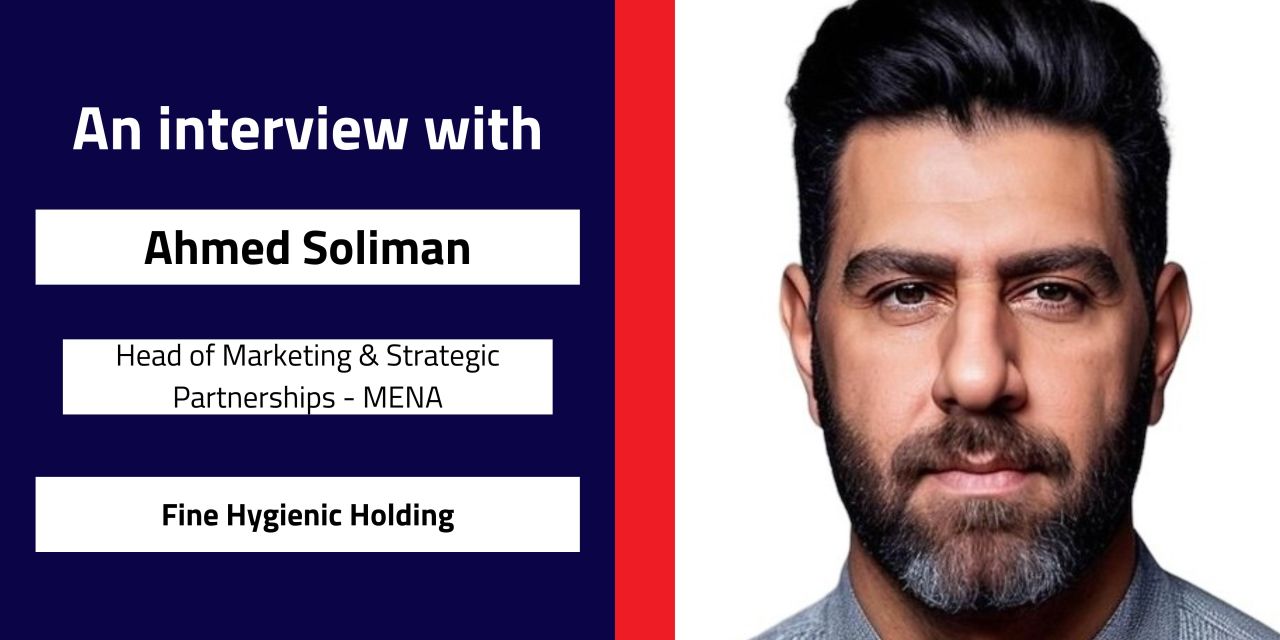
Seamless Xtra’s Carolina Lubinus interviews Ahmed Soliman, Head of Marketing & Strategic Partnerships – MENA at Fine Hygienic Holding.
Ahmed Soliman is a marketing strategist and business leader with over 15 years of experience across FMCG, technology, and manufacturing. He has worked with Fortune 500 companies, leading B2B marketing, strategic partnerships, and brand transformation initiatives. From securing high-profile sponsorships with FIFA to driving data-driven marketing strategies, Ahmed specializes in customer advocacy, account-based marketing, and operational efficiencies that drive business growth.
The Evolution of B2B Marketing: Trends, Social Media, and the Future of B2B Marketing
1.What are the most significant marketing trends emerging in the B2B space today?
B2B marketing is undergoing a fundamental shift, driven by three key trends: connected experiences, hyper-personalization, and operational efficiencies.
Today’s B2B customers expect a seamless journey across all touchpoints – whether they are engaging via digital platforms, direct sales interactions, or customer service channels. The expectation is not just convenience but continuity; they anticipate that brands will recognize them, understand their purchase history, and predict their needs with precision. This shift requires companies to break down internal silos and unify data sources, ensuring that every interaction reflects a comprehensive view of the customer.
Hyper-personalization takes this a step further. In an era of AI-driven insights, generic outreach no longer suffices. Customers expect tailored solutions, targeted messaging, and proactive recommendations. They no longer want to be just buyers; they seek strategic partners who help them drive efficiencies. This means brands must not only deliver on their unique value propositions but also make those promises tangible and measurable.
Finally, operational efficiency is becoming a defining factor. B2B buyers increasingly look for suppliers that offer more than just products-they expect services, automation, and solutions that streamline their own operations. The winners in this space will be those who don’t just sell but actively enable customer success.
2. What role does social media play in your marketing efforts, and how do you see its impact on reaching hygiene professionals?
Social media has become indispensable in B2B marketing, not merely as a broadcasting tool but as a platform for engagement, education, and relationship-building. The hygiene industry, like many others, thrives on credibility and trust, which social media fosters through thought leadership, peer validation, and real-world case studies.
By leveraging social platforms, brands can create highly targeted storytelling experiences that resonate with specific personas-whether it’s a facility manager looking for cost-effective solutions or a procurement executive focused on sustainability. Personalization in social media is no longer a differentiator; it’s an expectation. The ability to deliver content tailored to an audience’s needs makes social media difficult to replace or replicate with traditional marketing channels.
Additionally, real-time interactions, influencer partnerships, and community-driven discussions allow brands to establish authority in their industries. Hygiene professionals increasingly turn to digital platforms for insights, making social media a critical channel for education, advocacy, and brand differentiation.
3. How is data analytics shaping your marketing initiatives, and what types of data do you find most valuable?
Data is no longer a supporting function in marketing-it is the backbone of strategic decision-making. Coming from an FMCG and technology background, I firmly believe that brands must trust their data more than ever to drive meaningful engagement and optimize business outcomes.
One of the most overlooked yet critical data points is consumer behavior in retail environments. For example, studies show that shoppers spend fewer than seven seconds in an aisle making purchase decisions. This insight forces brands to rationalize their product assortment, refine messaging, and optimize merchandising strategies. Similarly, B2B buyers operate in high-pressure environments where efficiency matters-meaning marketing strategies must align with how they research, evaluate, and make decisions.
Beyond behavioral data, sentiment analysis is emerging as a game-changer. Tracking customer sentiment-how they perceive a brand, how satisfied they are with their experience, and how they discuss products in industry circles-offers an invaluable layer of intelligence. Brands that leverage sentiment analysis effectively can proactively address concerns, refine their messaging, and even innovate based on customer feedback.
4. What do you predict for the future of marketing in the hygiene industry over the next five to ten years, especially given the rapid advancements in B2B?
While digital transformation will continue to reshape B2B marketing, the next frontier will be advocacy-driven strategies. Building advocacy programs that encourage customers to share their experiences will become a core differentiator. In an industry where trust and credibility are paramount, peer recommendations and real-world use cases will outweigh traditional advertising.
We can also expect accelerated growth in Account-Based Marketing (ABM). As B2B buyers demand more customized solutions, ABM will play a critical role in building deep, value-driven relationships with key accounts. By combining data insights with tailored engagement strategies, brands can ensure their marketing efforts are not only relevant but also commercially impactful.
Another key development will be the rise of customer advisory boards featuring key opinion leaders. These advisory boards won’t just serve as brand ambassadors; they will actively shape product development, influence industry standards, and guide other buyers in their purchasing decisions. By co-creating solutions with customers, brands can future-proof their relevance and position themselves as indispensable partners.
The hygiene industry is at a pivotal moment. As businesses navigate changing customer expectations, regulatory shifts, and technological advancements, the brands that embrace data-driven personalization, operational efficiencies, and customer advocacy will define the future of the industry.
……….
Subscribe to the Seamless Xtra monthly NEWSLETTER
……….