

Photo by Towfiqu barbhuiya via Unsplash
The Worldpay from FIS Global Payments Report 2023 examines how consumers pay today both in-store and online across 40 global markets. Here are five trends we picked out from the report that reflect key changes in today’s consumer spending habits.
1. Real-time payment networks fuel growth of A2A payments
In 2022, account-to-account (A2A) payments continued to grow across the globe, with the expansion of real-time payment systems helping to provide faster, safer and more convenient payments for consumers at the checkout.
Real-time payment (RTP) schemes helped drive A2A payments to account for US$525 billion in global e-commerce transaction value, up 13 percent from US$463 billion in 2021. The growth of A2A in the U.S. mirrors the global trend, with A2A accounting for 9 percent of e-commerce transaction value in 2022.
This is projected to grow to 11 percent in 2026, fueled in part by consumer use cases arising from the 2023 launch of FedNow, the new real-time payments network, which will join existing U.S. real-time payment networks.

Photo by Christin Hume via Unsplash
2. Digital Wallets lead the field
Digital wallets continue to be the leading payment method globally, accounting for 49 percent of transaction value in e-commerce and 32 percent at the POS in 2022.
Digital wallets are projected to remain the leading payment method across e-commerce (54 percent) and POS (43 percent) in 2026, with fintechs, banks, neobanks, super apps, Big Tech and device manufacturers all competing as wallet providers.
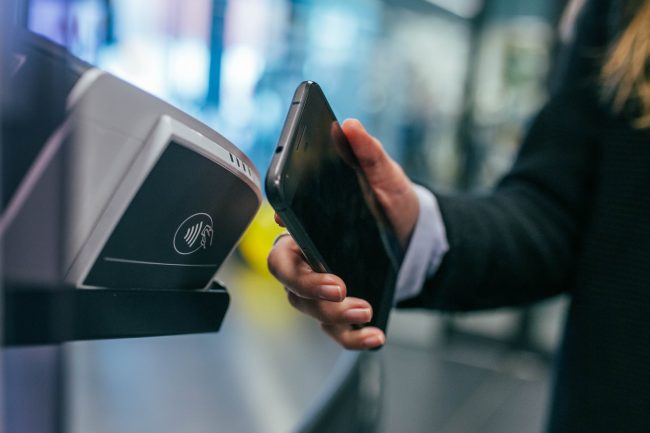
Photo by Jonas Leupe via Unsplash
3. Shift in balance of U.S. payments
Given the global trends perhaps this comes as no surprise but for the first time, digital wallets surpassed credit cards to become the leading payment method among U.S. consumers shopping online with 32 percent of e-commerce transaction value in 2022.
Although U.S. consumers are turning to wallets, they are not turning away from cards, with 31 percent of U.S. respondents saying they funded their wallets with credit cards, while 33 percent indicated funding by debit card.

Photo by Alexander Grey via Unsplash
4. Growing alternatives to meet credit demand
Meeting consumer demand for advanced payments has become increasingly important due to the effects of inflation on consumer spending and the threat of a global economic slowdown.
Credit demand is broadening to alternative credit products: credit card-linked digital wallets, buy now pay later (BNPL) and other POS financing offerings.
BNPL accounted for 5 percent of global e-commerce transaction value in 2022, and is projected to rise to 6 percent by 2026. POS financing – including BNPL, retailer financing and bank financing – represented 2 percent of POS transaction value in 2022, a share it is projected to maintain through 2026.
Meanwhile, consumers’ use of credit cards remains strong, with credit card transaction value growing 6 percent in e-commerce and 12 percent at the point of sale (POS) from 2021-2022.

Photo by Towfiqu barbhuiya via Unsplash
5. Cash continues to fall
The explosive growth in global e-commerce that took place during the first two years of the pandemic cooled in 2022, but only slightly, with global e-commerce transaction value growing by 10 percent from 2021 to 2022, to reach nearly US$6 trillion.
Cash use continues to fall globally, from 26 percent of POS transaction value in 2019 to 16 percent in 2022. By 2026, cash’s share of global POS transaction value is expected to fall to less than 10 percent.

Photo by Omid Armin via Unsplash