Africa is really getting into the digital money game. More investments and new rules are changing how people pay for things on the continent while banks and fintechs continue to work on making it easier to pay across borders too. Even though cash is still king, a survey by McKinsey says that might not last long. It predicts that Africa’s e-payment market could grow by about 20 percent each year hitting $40 billion by 2025. To put that into perspective, on the global stage, the growth in payments is expected to be much slower at 7 percent per year.
Sub-Saharan Africa has also seen remarkable progress in financial inclusion over the last decade, due in large part to the rise of mobile money. By 2021, only eleven economies in the world had more mobile money account holders than traditional bank account holders. All of them were in Sub-Saharan Africa.
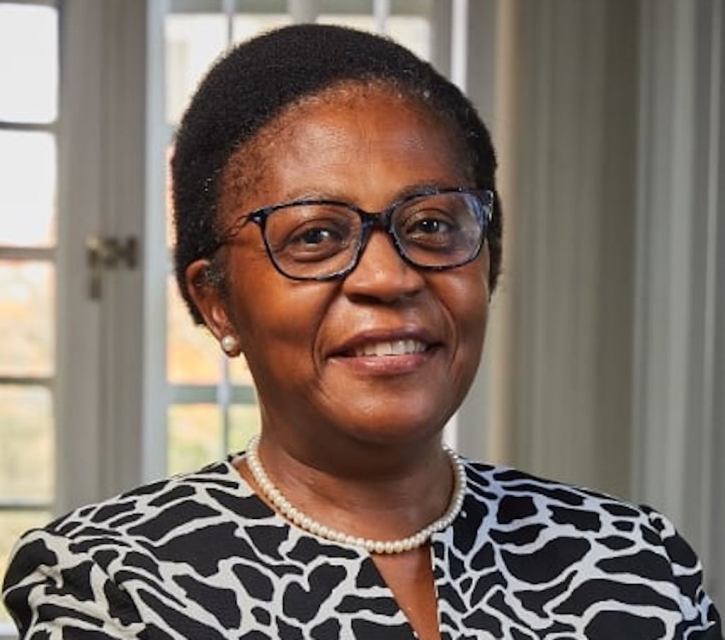
In its heart, in Mozambique, where the majority of the population lives in rural areas and only 30% of it currently has access to electricity, the journey toward comprehensive financial inclusion is far from over. Up until now, it has been led largely by organisations like Financial Sector Deepening Mozambique (FSDMoç) along with the government, regulators and financial service providers. Esselina Macome, CEO of FSDMoç, joined the organisation following a 10-year career as a board member of Mozambique’s Central Bank where she led the drafting of her country’s financial inclusion strategy.
“Taking out the infrastructure, I think the most urgent issue regarding financial inclusion is linked with knowledge,” she told Seamless Xtra at the Seamless Africa show in Johannesburg recently.
“In saying knowledge, I mean taking knowledge to a different level. First we need to ensure that people are literate. And that should not be only seen in financial terms, it should be seen in digital terms too.
Increasing knowledge and trust
“I think that for all of us that want to bring about increased digitalisation, we have to ask how are we contributing to the digital literacy too. Ultimately, if we are not doing anything on the digital literacy end, we are going to damage one of the most important things in the financial sector, which is trust. If there is a problem with trust, then we are also going to have a civil security issue. People are not going to trust things such as digital payments, and everything will eventually collapse.”
With a PhD in Information Communication Technology and unrivalled experience in payments systems, financial inclusion and currency management in her native Mozambique, Macome is better positioned than most to offer her take on the next steps in the country’s digital and financial transformation.
“The second thing we require is skills capacity. In order to have fintechs that are creating new innovations they need to have skills. Skills in technology but also skills to understand the business of finance. How to work with money and ensure that this money is being used as effectively as possible,” she says.
Introducing the sandbox
One recommendation that FSDMoç previously made to the central bank on the back of several studies was to introduce a regulatory sandbox. A fintech regulatory sandbox is an environment that allows all fintechs experiment with their solutions using open banking APIs.
To date, this has been a hugely important tool in developing Africa’s booming fintech sector, particularly in countries such as South Africa, Nigeria and Kenya, the three countries in the region with the most developed fintech ecosystems.
In Mozambique, the joint initiative Incubator Sandbox between the Bank of Mozambique and the Mozambique Financial Sector Deepening entity was established in 2018 with the objective of developing the national financial sector with a specific focus on expansion and inclusion. Macome is quick to point out that FSDMoç is not an implementer. Instead, it works with the regulator on one side and with the financial service provider on the other side.
“With this, they are implementing their ideas in a controlled environment. The question is always how do you put innovation and regulation work side by side to solve a specific need and this is one way that we have solved this issue,” Macome says.
“The regulatory sandbox came into being because we do have fintechs that have very good products, but even if they are solving a specific need the regulation often doesn’t allow them to be in place. It is important for the regulator to have a means of being able to work with the fintech and see what can be changed in order to allow them to implement their idea.”
Moving forward
Describing the state of the greater financial ecosystem and some of the future trends Macome acknowledges the need to improve financial inclusion among women and have a greater awareness of the impact of green finance.
“We need to move on to climate finance and have more of this type of discussion. We need to continue to look at how can you improve the usability of financial services by women, particularly using digital services because we can’t talk digital transformation in the financial sector without talking about how women can better use these digital services.”
Of course, Macome also serves as Chair of the Board of Directors of Standard Bank Mozambique. She admits the bank has a responsibility to consider all of these issues and finance not just in a way that helps the country’s people but also helps sustain the environment, too.
For instance, on a global scale, Standard Chartered has pledged to mobilise USD300 billion in green finance to aid the transition to net-zero around the world. In Ghana in 2021, Standard Chartered helped structure a EUR280 million social loan to fund a road infrastructure project. The bank also acted as the sole arranger to put together an innovative structure for a green private placement by Access Bank Nigeria.
“There are multiple things we need to think of at Standard Bank. If we are building a new branch, for instance, to what extent is this new branch aligned with all this debate that we’re having on climate,” Macome says.
“The second question is how Standard Bank might be prepared to support a country like Mozambique, which is always in a loss in terms of finance. Are we financing to support our climate products, or we are giving finance that is also contributing to damage the climate? We need now to think very closely about that. And it’s the same debate that we are now having whewn it comes to social inclusion.”
Esselina Macome joined the Central Bank of Mozambique in 2005 as Executive Director and Member of the Board, a position that she held until 2015. She is currently CEO of FSDMOç (Financial Sector Deepening Moçambique) while she has been working as chairperson of Standard Bank since December 2022.